Networks rarely fail for one reason. They stumble when little compromises accumulate: a little additional latency here, a throughput ceiling there, a failover that almost worked. In business environments, the craft lies in choosing where to be rigorous and where to be versatile. You can't maximize whatever at the same time, and attempts to do so often yield brittle, costly systems that still dissatisfy users. What follows comes from years invested fixing what looked like mysterious issues however constantly traced back to compromises that weren't made specific in the first place.
Three words that rarely suggest the very same thing
Latency has to do with time. For how long does a single package require to cross the network and return? Throughput has to do with capability and sustained motion. The number of bits per second traverse the path under real load? Reliability determines the probability of success over time. Will the path provide the package, again and once again, even when hardware stops working or traffic surges?
These objectives pluck each other. Methods that lower latency-- shallow buffers, aggressive queueing-- can hurt throughput for elephant circulations. Strategies that boost throughput-- deep buffers, broad pipes-- can increase latency for little, chatty requests. Dependability systems-- redundancy, state replication, control-plane procedures-- add overhead and in some cases jitter. The art remains in handling context. A trading flooring's rate feed fights for microseconds. A render farm pushing terabytes overnight wants consistent saturation. A call center running softphones can not endure jitter bursts that damage voice quality, even if average throughput looks fine on a dashboard.
The user experience is the yardstick
Choosing the ideal balance begins with the job to be done, not with the equipment. A sales demo stuttering during a customer call costs more than a backup ending up 20 minutes late. A warehouse scanner timing out at the dock holds up trucks. I've seen teams pour cash into 100 G links while overlooking that the ERP application made three dozen sequential round-trips per transaction. The outcome was a quick network and sluggish business.
Map the real flows. Catalog the critical courses, hop by hop, at the application layer. For each, jot down the latency budget, the throughput expectation, and the availability target. Numbers focus argument. If the video group needs sub-30 ms one-way latency and less than 10 ms jitter throughout websites, treat that as a tough constraint. If the analytics team just desires 10 G of constant throughput to object storage and can cope with 300 ms, plan accordingly. Stakeholders will typically accept trade-offs if you reveal them the mathematics and back it with keeping an eye on later.
Where latency hides
Most people think about fiber range and router hops. Those matter, but in the field the killers are typically smaller sized:
- Application chattiness that multiplies round-trips over high-latency links Oversubscribed uplinks that fill buffers at peak and add queuing delay DNS lookups with cache misses out on, or TLS handshakes that reoccur too often Mis-sized TCP windows on high bandwidth-delay product paths
If your WAN has 40 ms one method between areas, a five-RTT login handshake burns nearly half a 2nd before any information circulations. Wrap that in a websites that pulls assets from numerous domains and the hold-up substances. Repairing it may have little to do with circuits and whatever to do with HTTP/2 or HTTP/3 adoption, TLS session resumption, or pushing assets behind a CDN.
Another frequent source of latency is the access layer. Old switches with tiny buffers can crumble under microbursts that originate from servers with 25 G NICs. You see it as little spikes in packet loss and retransmissions. That lifts effective latency even if ping looks tidy. Changing access changes with models that have modern-day buffer profiles and QoS features can shave dozens of milliseconds off application deals without touching the WAN.
Throughput is physics plus politeness
You can't push more than the pipeline permits, however many underperformance originates from endpoints failing to fill the pipeline. High-speed, long-distance links require TCP tuning. Window scaling, selective acknowledgments, and pacing are vital. In practice, making it possible for BBR or CUBIC on Linux servers and validating NIC offloads can double or triple throughput on the exact same circuit. On managed firewall softwares and load balancers, look for features that unknowingly throttle throughput: deep packet assessment on high-speed circulations, legacy MTU settings that trigger fragmentation, or session table constraints that collapse under concurrency.
On the switching side, pay attention to how traffic hashes throughout links. Equal-Cost Multi-Path (ECMP) works best when flows are various and diverse. If you have one or two behemoth flows-- database replication, backup, video encoding-- you do not get the advantage of several members in a LAG unless you divided flows intentionally. Some teams deploy open network switches with programmable pipelines to push elephant streams onto committed courses, releasing the remainder of the fabric for mice flows.
One subtlety I found out during an information center growth: deep buffers help aggregate throughput for blended traffic, but they penalize latency-sensitive mice flows unless you segment lines strictly. Focus on critical classes with minimal buffering and explicit shaping while offering bulk transfers a bigger runway. When you pair this with sensible policing at the edges, you keep throughput high without drowning everything in queuing delay.
Reliability beyond "two of everything"
Redundancy is needed but not enough. Doubling elements without planning state, convergence, and upkeep windows typically yields complex systems that still go down during upgrades. Reliability grows from three habits: isolate blast radius, practice failure, and predisposition towards deterministic behavior.
Multi-chassis link aggregation provides you physical resilience, but control-plane complexity boosts. If the inter-chassis link flaps, the network may blackhole traffic for seconds. Routed gain access to with first-hop redundancy procedures is often more predictable than giant layer-2 domains. Withstanding the urge to stretch L2 across schools saves hours of midnight troubleshooting when covering tree chooses to teach humility.
For WAN reliability, run active-active paths when the application take advantage of immediate failover. That indicates accepting some ineffectiveness. Asymmetric routing will surface. You'll require consistent policies and symmetric NAT for stateful gadgets. Your telemetry ought to reveal course health and traffic distribution in genuine time, not 5-minute averages. At a former employer, we found that failovers looked clean only in one instructions; the return traffic stayed with a stopped working course for 20 seconds due to ECMP hashing. A minor policy modify in the underlay fixed it, however only after flow-level exposure informed the truth.
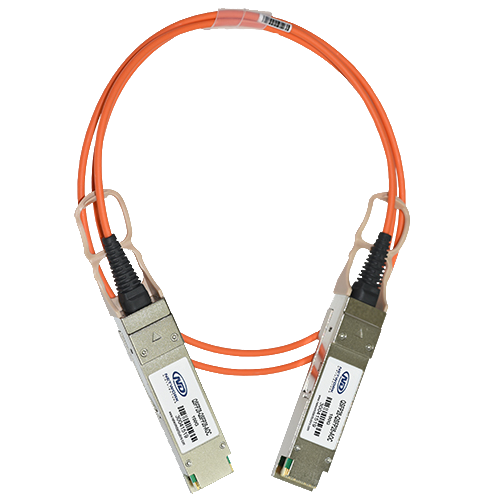
Device dependability is also a supply chain story. Parts schedule matters. When you standardize on an enterprise networking hardware household, validate that your fiber optic cables provider can support the full matrix of lengths and port types you need, including bend-insensitive variants for tight racks. Validate that compatible optical transceivers are qualified on your switch OS versions. Mixing unknown third-party transceivers can conserve money on paper however bite you later with spurious DOM readings or link flaps under temperature shifts.
The physical layer still sets the stage
It's tempting to jump straight to SD-WAN overlays and traffic engineering. Smart software application helps, but the underlay sets your ceiling. Fiber routes, splice counts, and jacket types affect both performance and maintainability. If you're retrofitting older structures, spending plan time for course studies. We've found channels pinched behind tradition chillers, meaning the "brief route" included two unanticipated splices and 3 dB of loss. That loss translates to a smaller power margin for optics, which in turn limits your option of transceiver and your upgrade path.
Inside centers, neatly labeled spot panels are not a cosmetic luxury. They shorten occurrence response. Document which spot leads are single-mode vs multi-mode, and keep extra lengths in consistent increments. Half the angry calls throughout cutovers come from somebody finding that the only extra is 1 meter and the switch is mounted expensive. Keep color-coding standards. Do not trust them blindly; confirm with a light meter before a major change.
Working with a strong fiber optic cables supplier pays dividends. Beyond rate, try to find lead-time reliability, factory test reports, capability to pre-terminate for your exact trunk lengths, and assistance on bend radius. Over a multi-year horizon, these small factors prevent vulnerable links that act fine at 1 G but flap at 25 G.
The control plane dictates your day
Operational simpleness correlates with uptime. Choose procedures that your team can support under tension. If your core staff understands OSPF inside out, and your network footprint does not demand the scale of BGP all over, do not release BGP to be fashionable. That stated, large-scale business geographies frequently benefit from BGP's policy clarity when integrated with an IP material. Just be consistent. Mixing OSPF in odd corners, static routes for shadow paths, and per-box ACLs invites drift that ultimately manifests as weirdness you can't reproduce.
Automation is a dependability feature. Golden configs, intent recognition, pre-change simulations-- these prevent the fat-fingered ACL that blocks a country. Open network switches make automation much easier when they expose a tidy API and support standard models. However openness alone doesn't conserve you. Stock hygiene, variation pinning, and test labs that mirror production minimize the opportunity that a micro-upgrade toggles a default that changes forwarding behavior.
I have actually learned to demand modification windows that consist of confirmation scripts and rollback strategies written before work starts. A crisp 20-step runbook beats a brave improvisation. Trust grows when maintenance ends with "we verified end-to-end flows X, Y, and Z; here are the before-and-after metrics."
QoS that earns its keep
Quality of service is simple to make it possible for and tough to solve. Lots of networks run with a default "best shot" policy and work fine up until they don't. Voice and video crackle, transactional systems spike in latency throughout backups, and somebody proposes a new MPLS circuit. Often, the fix is smarter queueing at edges and aggregation.
Start with little, concrete classes. Provide voice a stringent concern queue with a tight policer to prevent starvation. Take a class for interactive control traffic like SSH, VDI control channels, or repair messages. Offer bulk transfers a big but measured show a bandwidth warranty, not carte blanche. Mark traffic as near the source as possible and honor markings throughout domains consistently. The worst results take place when one group's DSCP strategy hits a provider's mentioning guidelines, turning your careful design into best Fiber optic cables supplier effort at the peering point.
Measure QoS, do not just configure it. Synthetic probes that produce EF, AF, and BE flows can validate that lines behave under load. Without measurement, QoS devolves into ethical support.
Monitoring that matters
Dashboards increase. Select metrics that connect back to user experience. End-to-end latency per application flow beats user interface counters for fact most days. Circulation logs that show retransmissions, jitter, and course changes let you correlate grievances with network truths. Historical standards matter. A continual increase from 3 ms jitter to 8 ms on a voice path will not journey generic alarms however will deteriorate call quality. Alert on deltas, not absolutes.
When capability preparation, see the 95th percentile utilization and buffer tenancy under peak. If your 95th sits above 70 percent on an uplink throughout company hours, anticipate difficulty throughout occasions. For throughput-sensitive workloads, monitor window sizes at servers and retransmit rates instead of only link utilization. A healthy 10 G relate to 0.1 percent packet loss can collapse a single TCP flow to well under a gigabit without careful tuning.
Where open communities help and where they complicate
The increase of disaggregated networking improved procurement and operations for lots of business. With open network switches, you select the hardware platform and run a network OS that fits your culture. The technique can reduce expenses and increase versatility, particularly when you wish to standardize on a leaf-spine fabric with uniform functions across suppliers. It likewise demands discipline. Qualification screening becomes your responsibility. So does guaranteeing that compatible optical transceivers act properly with your selected NOS and the particular ASIC forwarding pipeline.
Vendor-integrated equipment still belongs. If you run a small team with minimal time for lab work, an integrated stack with strong vendor assistance can lower operational threat. Hybrid methods work well: utilize open network switches in the information center fabric where patterns are consistent and automation is fully grown, and utilize a more integrated option at the branch where the edge conditions vary commonly. Procurement needs to reflect functional reality, not ideology.
Procurement as a lever, not an afterthought
Contracts that look almost identical on a price sheet diverge considerably in lifecycle expense. Concentrate on three elements: lead times and stock buffers, transceiver and cable television compatibility dedications, and software entitlement clearness. If your enterprise networking hardware depends on optics that have 12-week lead times, you will make riskier choices throughout events. Build a little onsite buffer of critical optics and cable televisions. If you standardize on a set of suitable optical transceivers, keep a living matrix of approved designs, firmware levels, and where they are released. Drill swaps in a lab so that a field tech can change a 100GBASE-LR4 without finding that DOM readings report dBm in an unexpected unit.
When choosing a fiber optic cables supplier, judge them by consistency and documents. Do they provide serial-level traceability and test outcomes? Can they provide pre-terminated trunks with identified legs that match your rack strategy, not a generic pinout? Will they assist train your personnel on handling, cleaning, and inspecting ports? The best suppliers minimize errors that otherwise masquerade as periodic network faults for months.
The WAN: where expectations satisfy distance
At local and worldwide scale, you can not cheat physics. A New York City to London round-trip time bottoms out around 70 ms under perfect conditions and more realistically hovers near 75 to 85 ms. If an app requires sub-50 ms RTT for appropriate performance, the repair is architectural, not company shopping. Push services closer to users. Cache strongly. Use asynchronous workflows. For traffic that needs to cross oceans quickly, purchase premium routes that decrease intermediate points and devote to monitoring service providers with SLA credits that really matter.
SD-WAN adds control and can raise dependability when set up with care. It can likewise mask underlay problems. Test underlay links independently on a regular cadence. If one circuit breaks down and your overlay hides it, you pay for a course you don't really have. Forming traffic per application class and do not rely solely on overlays to treat bad LAN health. The course from a branch PC to the preferred compatible optical transceivers WAN exit typically contributes more jitter than the carrier.
Case sketch: voice and video throughout 2 campuses
A medical company ran voice and video consults between two local campuses 900 kilometers apart. Complaints centered on choppy audio mid-afternoon, even though link usage averaged only 45 percent. A fast ping test showed steady RTT around 11 ms one way. All looked fine at a glance.
Flow-level analysis revealed bursts of microburst-induced loss on the campus cores whenever the imaging department pressed 20 G file transfers to the archive. The campus switches had shallow shared buffers and a single general-purpose line. The fix had three parts: upgrade to switches with much deeper buffers and per-queue controls, create a strict concern queue for EF-marked voice and a little high-priority queue for AF41 video control traffic, and push imaging transfers into a shaped class. We also tightened QoS at the server NICs and implemented DSCP saying enforcement at the access edge. The result was tidy audio even under full throughput for imaging. Throughput remained at line rate for bulk transfers; latency for voice supported listed below 20 ms end-to-end with jitter under 5 ms.
The lesson wasn't "purchase bigger switches." It was to align queueing with work patterns, enforce markings at the edge, and comprehend that average utilization states little about instant behavior.
Edge constraints: cordless and remote sites
On Wi‑Fi, latency and throughput wrestle constantly. The medium is shared, and airtime is the currency. Channel preparation, transmit power, and customer diversity choose who wins. Do not throw high-order modulation at noisy environments. A stable MCS with less retransmission beats a theoretical peak that collapses under interference. For voice on Wi‑Fi, target << 30 ms included latency and maintain headroom by restricting customer counts per AP in thick areas. Simple actions matter: guarantee appropriate band steering, disable tradition data rates when safe, and validate that wandering limits line up with the physical layout.</p>
At remote sites, reliability depends on mundane information. Keep extra power bricks for small switches. Label LTE failover SIMs with the plan information. Pre-stage the device config so that an on-site reset doesn't eliminate important criteria. Lots of failures I've seen at branches trace back to a forgotten DHCP reservation or a service provider CPE that went back firmware throughout a maintenance window. A brief, laminated healing guide in the network cabinet saves everyone's time.
Designing with intent: a practical blueprint
For a typical mid-size business with multiple schools, a regional information center, and a couple of dozen branches, a well balanced design might appear like this:
- A routed leaf-spine fabric in the data center utilizing open network switches, with an IP fabric running eBGP and equal-cost multipath. Reserve strict top priority for voice and low-latency classes, and shape bulk transfers. Use suitable optical transceivers vetted with the selected NOS, and keep a little onsite stock. Campus cores with modern-day QoS, consistent DSCP policy from access to core, and segmentation utilizing VRFs for sensitive departments. Avoid extending L2 in between buildings; use redundant L3 links and tested first-hop redundancy protocols. Dual underlay WAN circuits per significant site with active-active forwarding. SD-WAN for application-aware routing and presence, however keep underlay health tracking different. Concur with suppliers on saying habits and SLA enforcement methods. Physical layer discipline: clearly documented patch fields, checked fiber keeps up determined loss budget plans, and a relationship with a fiber optic cables supplier who can deliver customized pre-terms and quick-turn replacements. Continuous validation: artificial transactions for critical apps, circulation telemetry, and weekly reviews of abnormalities. Automate setup with variation control and staged rollouts. Keep a test lab that mirrors crucial features of production.
The blueprint is not a prescription; it's a reminder to bind innovation options to the latency, throughput, and dependability profiles you care about.
Telecom and data‑com connection as a shared discipline
The historical divide between telecom and data networks has actually blurred. Voice is an app. Video is an app. MPLS, web, private waves, and 5G all feed the very same enterprise foundation. Policies need to cover domains. That suggests your telecom and data‑com connection method should unify around a couple of facts: classify early, impose markings regularly, and measure from the user's perspective. Agreements must specify how service providers manage DSCP, how package loss is measured, and how jitter and one-way delay are reported. If you can not get one-way measurements, release your own probes that timestamp at both ends.
When upgrading speeds, do not forget optical link budget plans and thermal truths. Higher speeds narrow margins. A link that behaved at 10 G with low-cost optics may require tuned optics and cleaner ports at 100 G. Spending plan for cleaning packages and training. More than once, a "bad line card" ended up being a dusty ferrule.
Costs you can see, expenses you ca n'thtmlplcehlder 138end. Latency's expense appears as slow clicks and disappointed users. Throughput's expense looks like over night tasks spilling into organization hours. Reliability's cost appears as overtime, reputational damage, and opportunity lost throughout outages. The least expensive network on a spreadsheet can be pricey in practice. Alternatively, overbuilding all over squanders capital that could money much better instrumentation and training. When you negotiate for enterprise networking hardware, look for transparent licensing that aligns with how you operate. Membership models that include software application updates, TAC assistance, and security feeds may be a bargain if they decrease downtime and keep functions present. When you devote to open environments, purchase internal tooling and abilities. When you devote to a single vendor stack, work out for roadmap clarity and steady APIs, so you can automate confidently. A final note on judgment
Networks are living systems. You will not get every bet right. What matters is to put stakes in the ground: articulate the latency budget plans, the throughput targets, and the reliability objectives for each class of traffic. Pick hardware, optics, and providers that support those objectives with predictable behavior. Test in the lab. Step in production. When trade-offs provide themselves, weigh them in the open with the people who feel the impact.
The payoff is quiet. It sounds like a video call that simply operates at 4 p.m., a backup that ends up at 3 a.m., an upkeep window that ends early, and a page that never ever fires since the failover happened so efficiently that nobody saw. That's the balance worth chasing.