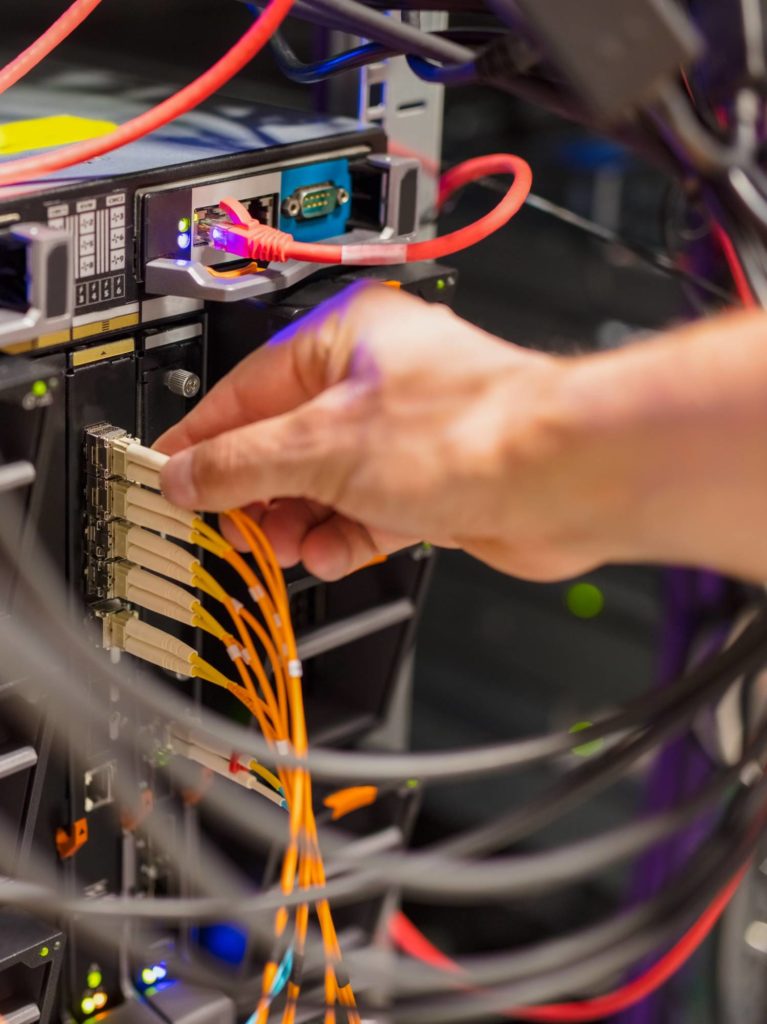
Dense fiber constructs appearance classy after the last tie wrap is trimmed and the labels line up like piano keys. Getting there is another story. At scale, the difference in between a tidy, reliable patching system and a spaghetti headache frequently comes down to 2 things: the mechanical reasoning of the high‑density platform you pick, and the quality of the partner who supplies the fiber plant and accessories. The very best hardware won't conserve you from breakable jumpers and inconsistent polishing; an outstanding fiber optic cables supplier can not untangle a poor chassis style. You require both working in concert.
Over the last decade I have actually assisted move colo rows to 40/100G, crushed a few fingers on tight rear rails, and refactored spot fields after development made the initial strategies laughable. The very same concerns keep emerging: area pressure, cooling constraints, move/add/change churn, and the soft costs that hide inside "inexpensive" parts. High‑density patch panels and modular cassettes sit at the center of all of this. They bridge outdoors plant or circulation trunks to switch ports and server NICs. They dictate how easily you can turn up brand-new services, how easily you can troubleshoot during an interruption window determined in minutes, and how much you'll invest in rework.
What "high density" really implies in the rack
Marketing numbers differ, however the significant definition ties density to functional use. A 1U panel that technically holds 144 LC ports is not high density if you require needle‑nose pliers to extract an unsuccessful jumper on a hot afternoon. The useful ceiling depends on adapter type, cable television diameter, and front‑access serviceability. With LC duplex, 48 to 96 ports per rack system remains workable for the majority of groups. With MPO, particularly in breakout setups, you can press higher, but you trade simpleness for throughput. The cassette design assists by moving polishing, connectorization, and fan‑out inside a factory‑sealed module; that shifts the variability from the field to the production bench where it belongs.
True high density also accounts for rear clearance and airflow. A chassis that accepts twelve cassettes across the front might need 10 to 12 inches behind the rails to accommodate bend radius and trunk management without pinching. Disregarding that clearance is how you end up with silent killers: microbends that imitate intermittent devils in the 1310 nm window, or trunks that stop working when someone leans on the rear door.
The cassette choice: LC, MPO, and the locations they shine
The cassette is the heart of modular density. Typical variants end MPO on the rear and present LC duplex on the front for server or switch patching. That format allows quick turn‑ups: you land a 12‑fiber or 24‑fiber trunk, snap in the cassette, and you have a tidy front with method‑labeled ports.
When you can keep things homogenous, native MPO on both sides may be much better. Leaf‑spine fabrics using 100G or 400G start to take advantage of MPO‑to‑MPO or MPO‑to‑CS/ LC breakouts since you reduce the variety of mated interfaces. Every breeding surface area presents insertion loss and a chance for contamination. I have actually seen spot fields where a 0.75 dB budget evaporated under the microscopic lense because someone decided to run "momentary" jumpers throughout 3 panels. With newer 400G ZR/ZR+ optics, you have less space for sloppiness; link spending plans can be tight even with great components.
Beware of mixing MPO generations and fiber counts without a strategy. Twelve‑fiber and twenty‑four‑fiber communities exist together, however the pinout and enterprise IT networking hardware polarity techniques differ. Make polarity a first‑class requirement, not an afterthought. Great suppliers ship cassettes with clear labeling for Technique A, B, or C and include adapters or assistance when you need to cross methods. The bad ones ship whatever's in the bin and leave your field tech to discover it at 2 a.m.
Patch panel mechanics that matter on a Tuesday afternoon
Tool less latches sound trivial till you need to swap a cassette under time pressure. Panels with favorable tactile feedback conserve minutes and prevent partial seating that causes ghost errors. Hinged or slide‑out trays aid with front‑only service racks, where rear access is limited by hot aisles or locked cages. Cable television managers that match the panel width and line up with cage nuts aren't simply visual; they protect bend radius and avoid ports from getting tugged when someone brushes by.
Label area is another sleeper function. Modules that reserve a tidy strip for printed labels motivate good hygiene. If you're scribbling on blue tape, you'll make errors throughout MACs. I prefer platforms where each cassette has a removable label card that you can pre‑print from the DCIM export. Convenient when the naming convention shifts and you need to update without peeling stickers.
Density's hidden tax: loss budgets and cleaning up rituals
The very first time we moved a floor of 10G ports to 40G utilizing LC‑to‑MPO cassettes, the numbers looked great on paper. Then the turn‑up window arrived. The determined loss was fine on brief links, minimal on mid‑runs, and out of spec on a handful that shared the very same trunk path. The culprit wasn't a single failure; it was statistically normal loss from several mated sets integrated with a few dust specks that elevated return loss. In aggregated systems, little penalties compound.
Two controls aid. Initially, specify insertion loss targets in your order. Do not accept "industry requirement." For LC ports, demand typical IL around 0.15 to 0.2 dB per mated couple with maximums not exceeding 0.35 dB, and MPO normal IL around 0.25 to 0.35 dB with maximums under 0.6 dB for low‑loss variations. Yes, low‑loss expenses more, however you recover it in flexibility and fewer escalations. Second, standardize cleaning and assessment at every mating action. Dry cleaning, check, damp cleaning if required, inspect again. It feels fussy till you skip it and burn an hour debugging what ends up being residue on a single ferrule.
A reliable fiber optic cable televisions supplier will release IL and return loss distributions, not just single‑point "typical" claims. Ask to see their procedure ability indices or at least historical pie charts. If the associate can't produce them, that's a data point.
Matching platforms to topologies
A central patching approach focuses density into a couple of enormous panels. It streamlines stock and makes grooming foreseeable. The downside is longer runs and more risk concentration. Dispersed patching plants little panels near the compute and networking equipment. You get much shorter jumpers and cleaner airflow however more sites to manage and label.
For little to midsize enterprise networking hardware implementations, a hybrid design typically works best. Terminate trunks in a top‑of‑row panel, then cross‑connect to access switches with brief LC jumpers. In spine‑leaf cores with open network switches and high‑speed optics, go heavier on MPO and pre‑terminated trunks; keep the number of mated pairs low and predisposition towards fewer conversion points. If you plan to ride several upgrade cycles, select chassis that accept both LC and MPO cassettes so you can swing in between breakouts and straight MPO as port speeds evolve.
How transceivers make complex-- and enable-- your choices
The cassette and panel are just half of the optics story. The optics in your switches determine the jumper types, pinouts, and power budget plans. Utilizing suitable optical transceivers from a trusted 3rd party can make or break your economics, especially when you're scaling dozens or numerous ports. The catch depends on interoperability. Not every supplier's "compatible" QSFP28 or SFP28 acts identically under every OS build, and not every switch endures every EEPROM map.
An excellent supplier brings more than a SKU. They bring a lab. They check compatible optical transceivers against the precise firmware on your open network switches and proprietary platforms, and they share the matrices before you devote. In my last migration, we prevented an unpleasant ROM checksum concern on a set of whitebox TORs due to the fact that our provider flagged a particular optic EEPROM revision that caused soft alarms. That's the difference between a parts reseller and a partner.
When you prepare high‑density panels, think end to end: if your optics group is pushing BiDi to spare fiber pairs, your cassette option modifications. If you're choosing QSFP‑DD 400G SR8 and breaking into 8x50G, then an MPO‑16 or MPO‑8 community might be more effective to tradition twelve‑fiber. Your provider ought to map this with you, not hand you a generic catalog.
Bend radius, microbends, and the art of not squashing trunks
Cables act like springs with memory. They forgive little insults and fail months later on from the accumulation. High‑density panels invite bad habits: tight loops to make the front look pretty, trunks packed behind the rails, zip ties cinched until the sheath dimples. Single‑mode is more tolerant than multimode at brief lengths, however neither likes abuse.
I've had best of luck demanding slack management that utilizes figure‑eight patterns in designated trays and Velcro straps set to 2 fingers of clearance. On the rear of cassettes, utilize booted connectors that eliminate tension without adding stiffness that fights you in tight spaces. Ask your supplier for the minimum bend radius under load and no‑load, and verify that the rear wire managers in your chosen chassis actually accommodate those minima. If they don't, you'll see slow‑burn failures you can't recreate on the bench.
The software side: labeling, DCIM, and what your supplier can automate
The perseverance you invest in clean labels pays off every time a human touches the plant. However hand typing port names into tiny strips is its own brand of torment. The much better vendors provide CSV design templates that match their cassette port maps and pre‑cut label stock that slides into the modules. If your environment utilizes DCIM, ask whether the supplier can deliver label files that line up with your port calling schema. I have actually seen teams shave a day off a big turn‑up just by getting rid of manual label edits.
Some suppliers likewise use serial trunks with QR codes linked to check reports. Scan the code, pull the OTDR and IL numbers, and connect them to the DCIM object. During troubleshooting, that history lets you separate handling damage from original production variation without guesswork.
Partnering criteria that separate reputable from risky
Choosing a fiber optic cable televisions supplier is less about logo acknowledgment and more about repeatable efficiency under load. I search for a few concrete signals.
- Evidence of procedure control: genuine test reports per assembly, not generic certificates; insertion loss circulations; return loss numbers; and identification number traceability that survives an RMA. Platform fluency: an understanding of how their cassettes, trunks, and jumpers act with your particular telecom and data‑com connection stack, from enterprise networking hardware to open network switches, consisting of polarity approaches and MPO keying. Lifecycle assistance: a roadmap that anticipates speed migrations, plus equipping prepare for spares. Can they still ship your LC cassettes next year when you're knee‑deep in MPO for brand-new racks? Interop lab: the ability to verify compatible optical transceivers against your NOS images and a process to keep that matrix present as firmware evolves. Honest lead times: clear interaction about construct queues during crunch periods and options for partials when your schedule shifts.
Five checkboxes won't guarantee success, however they reduce the number of surprise fires you'll combat later.
Cost, where it counts
The most costly panels I have actually ever released weren't the ones we bought; they were the ones we needed to touch two times. Revamp feasts on labor budgets. A lured purchaser will go after a low per‑cassette rate without accounting for the invest in field termination sets, the extra loss in ordinary‑loss elements that constrains future optics, and the increased cleaning and examination overhead that minimal polish quality imposes.
At the other end of the spectrum, premium chassis do not constantly deliver premium outcomes. Some conceal their proprietary lock systems behind long preparations for replacement cassettes. Others over‑optimize for pretty cabling at the cost of rear clearance. Price conversations should be framed by the overall installed cost over the first year: hardware, turn‑up labor, troubleshooting calls, and the versatility to adapt without wholesale replacement.
I usually spending plan for low‑loss across the foundation cassettes, ordinary‑loss for edge panels with brief jumpers, and buy cleansing sets and scopes that live in the same drawer as the panels. And I need spares on website: cassettes, trunks, and a handful of the specific jumpers utilized in the front. Downtime dislikes procurement cycles.
Migration stories and where designs stumble
One of the cleanest transitions I've seen was a dual‑site core moving from 10G leaf‑spine to a combined 100G/400G fabric. They standardized on a chassis that might host both LC and MPO cassettes. During stage one, they ran 100G SR4 with MPO‑12 cassettes on the spine and LC cassettes on the leaf. For stage two, they kept the same chassis but switched a number of LC cassettes for MPO to feed 400G SR8 ports via MPO‑16. Due to the fact that the provider flagged the distinction in between MPO‑12 and MPO‑16 keying and polarity early, they staged the trunks correctly and avoided polarity gymnastics during the cutover.
Contrast that with a colo customer who bought look‑alike trunks from two various sources. One supplier shipped Technique B, the other Approach C, and the cassette batch on the rack took place to be blended. The port‑by‑port light loss looked random. It took half a night, a visual fault locator, and a great deal of re‑labeling to untangle. The source wasn't a single bad purchase; it was the absence of a partner who would have insisted on standardizing polarity across the bill of materials.
Environmental realities: heat, access, and human factors
High density panels pack a great deal of human activity into a small area. In a hot aisle, a two‑minute task feels like 10. Panels that let you service from the cold aisle Fiber optic cables supplier only, with slide‑out trays and front‑accessible locks, extend professional endurance and minimize errors. Color‑coded boots on jumpers help, however pick colors that do not wash out under LED lighting and stick to a scheme everyone can remember.
Access matters outside the data hall also. If your websites include little closets or roofing system enclosures, prioritize dust‑resistant shutters on LC ports and robust cassette shells that can deal with a couple of bumps. In telco environments where craft skills vary widely, you desire foolproofing: keyed adapters, explicit port numbering, and guides that make the right bend course obvious. Good mechanical style prevents imaginative but destructive cable television routes.
Testing discipline and what you should demand on delivery
Every trunk ought to show up with a test report that covers insertion loss per path at relevant wavelengths. For single‑mode, take a look at 1310 and 1550 nm; for multimode, 850 and 1300 nm. OTDR traces aren't constantly included, but they're useful for longer runs or when you're landing in existing conduit with unidentified splices. Ask for a sampling strategy: if they do not evaluate 100 percent, what percentage, and how do they pick the sample? For short in‑row trunks, complete IL testing is affordable and need to be expected.
On arrival, test a subset yourself before you begin dressing. An easy pass/fail at the spot field conserves rework later on. Develop the pass threshold based on your budget, not a generic number. If your optics already chew up 2 dB, you don't have space for sloppy assembly.
Open ecosystems and why vendor agnosticism helps
Open network changes changed the economics of high‑speed ports. They also altered the way groups think of optics and cabling. When you can disaggregate the hardware and software, you reclaim utilize in how you source suitable optical transceivers and cabling. The trick is to keep the end‑to‑end picture meaningful. A supplier who comprehends both telecom and data‑com connectivity can align cassette options with transceiver assistance lists, cable jacket scores with your fire codes, and identifying conventions with your DCIM. They must be as comfortable discussing QSFP‑DD FEC modes as they have to do with LC polish types.
That cross‑domain literacy pays dividends during troubleshooting. If a 100G link flaps periodically, you desire a partner who can help you isolate whether you're handling a limited optic, filthy ferrule, microbend, or a firmware quirk in the switch that misreads DOM worths. When you scale, those single‑issue repairs build up into significant uptime.
Practical procurement plays that de‑risk the build
The purchase order is where you bake in some security. Bundle cassettes, trunks, and jumpers from the exact same household when possible to line up polarity and pinouts. Define IL maximums and return loss minima in the order text. Consist of part numbers for cleaning kits and examination scopes; if they're on the exact same PO, they're on website when the gear arrives.
Stage the delivery around actual rack preparedness. There's nothing even worse than saving pre‑terminated trunks on a warehouse rack where they can be mishandled. Have the supplier ship in rack‑order batches with clear labels that match your layout drawings. For big builds, work out a rolling forecast so they hold raw materials and can take in schedule slips without pressing your lead times into the next quarter.
Finally, lock in a sparing strategy. One cassette per 20 set up is a sensible starting ratio, plus two of each trunk length in usage on the floor, and a lots of each jumper type. When something fails during an upkeep window, you don't want to wait for the next truck.
Where glass fulfills silicon: a last word on alignment
High density patch panels and cassettes equate glass physics into day-to-day operations. Done well, they disappear into the background, a quiet facilities that speeds every relocation and prevents lots of faults. Done improperly, they become a friction point that steals time from your engineers and makes complex every failure call. The differentiator isn't only the metal and plastic. It's the positioning in between the design of your patching system, the abilities of your open or proprietary switches, the habits of your suitable optical transceivers, and the quality habits of the people who supply your fiber.
Pick hardware that respects hands and airflow. Pick a fiber optic cables supplier who treats loss spending plans, polarity, testing, and interoperability as first concepts instead of afterthoughts. Then impose a few rituals-- inspection before mating, identified ports that map to DCIM, bend radius discipline-- and your thick builds will keep their guarantee: more capacity in less area, without the functional tax.